
Cooking miso soup brings a sense of warmth and comfort that stores can't replicate. I still remember the first time I made this soup; the aroma filled my kitchen and brought back memories of my favorite Japanese restaurant. Each spoonful of that savory broth took me back to a lovely meal shared with friends. There's something magical about crafting this dish from scratch, knowing exactly what goes into it.

Making miso soup not only warms the soul but also allows you to enjoy fresh flavors that are far superior to packaged versions. It's a simple yet rewarding process that yields a delicious soup, perfect as a starter or even a light meal. Plus, you can customize it with your favorite toppings like mushrooms or tofu for a satisfying experience.
Why You’ll Love This Recipe
- Easy to Make: This recipe features simple ingredients and clear steps, making it accessible for cooks at any skill level.
- Customizable: You can easily adapt the recipe by including different ingredients like mushrooms, noodles, or even a poached egg.
- Rich Flavor: Using dashi broth enhances the soup's umami flavor, creating a deeply satisfying taste.
- Healthy Ingredients: Miso, tofu, and seaweed are nutritious and provide a good balance of flavors and textures without being overly complicated.
- Quick Preparation: The entire process takes about 30 minutes, making it ideal for a quick meal or a comforting bowl of soup.
Ingredients You'll Need
- Water – 4 cups. The base of your soup, it serves as the main liquid for the dashi.
- Kombu – 6 inch piece, dried kelp, rinsed. This seaweed adds depth and umami to the broth.
- Bonito Flakes – 1 oz, dried and shaved. These flakes contribute a rich, smoky flavor to the dashi.
- Dried Seaweed – 1 oz, soaked in warm water and drained. Adds texture and flavors that complement the soup.
- Silken Tofu – 4 oz, cut into small pieces. Provides a soft texture and protein boost for the dish.
- White Miso Paste – 2 ½ to 3 tablespoons. This is the star ingredient giving the soup its characteristic flavor.
- Scallion – 1 tablespoon, chopped. Serves as a fresh garnish, enhancing the soup's visual appeal and taste.
- Mushrooms, Noodles, or a Poached Egg – Optional. These are great toppings to personalize your soup further.
How to Make Miso Soup
Step 1: Make the Dashi Broth
Start by adding 4 cups of water and the kombu to a pot. Heat it over medium until it simmers but does not boil. Remove the kombu, then add the bonito flakes and let it simmer for about 5 minutes. Skim off any foam that surfaces.
Step 2: Strain and Reheat
Use a fine mesh sieve or cheesecloth to strain the broth. Discard the bonito flakes, then return the clear broth to the pot. Bring it back to a gentle simmer.
Step 3: Add Seaweed and Tofu
Add the soaked seaweed and cubed tofu to the broth. Let it simmer for about 3 minutes until the tofu is heated through and the seaweed softens.
Step 4: Stir in Miso
Turn off the heat. In a separate bowl, mix a few spoonfuls of hot broth with the miso paste until smooth, then stir the mixture back into the pot. Avoid boiling the miso to keep its flavor intact.
Step 5: Top and Serve
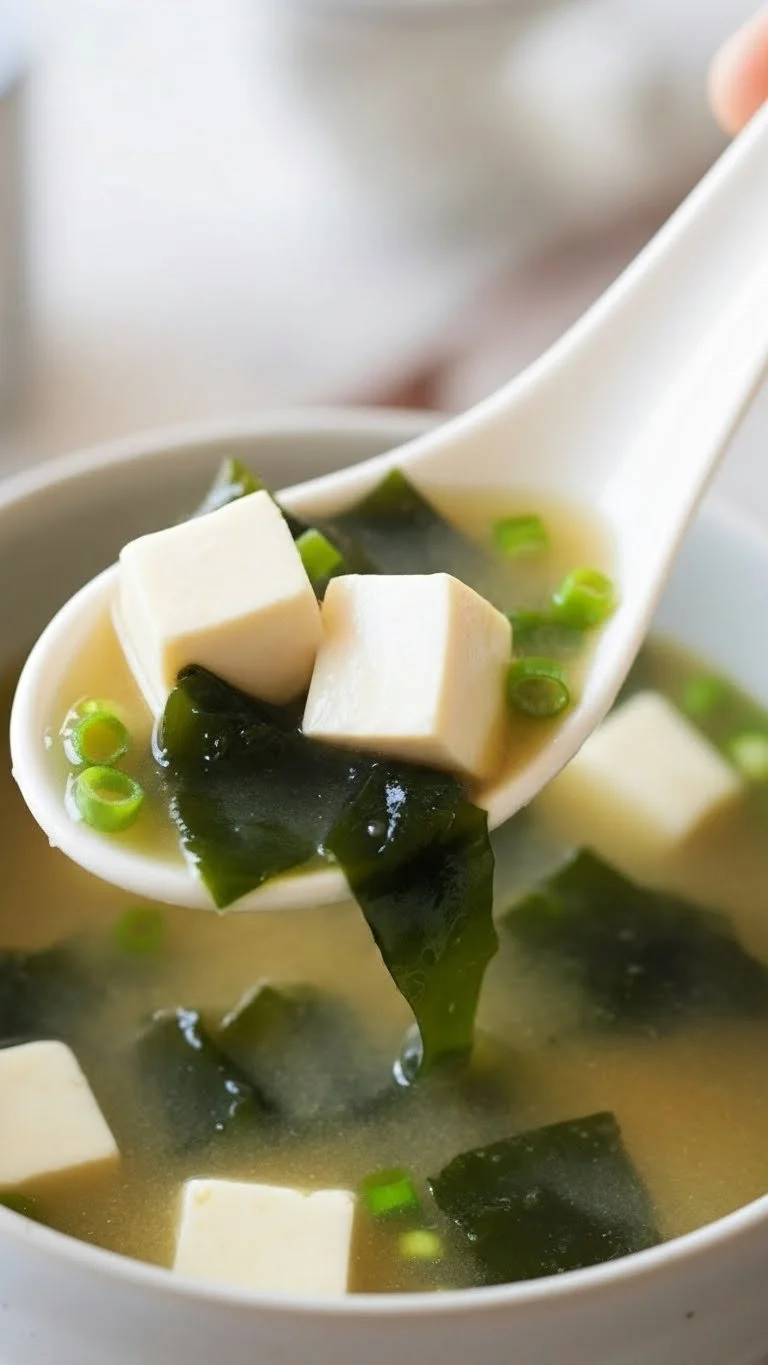
Ladle the soup into bowls and then sprinkle with chopped scallions. Serve your homemade miso soup immediately for the best experience.
Pro Tips from My Kitchen
✓ Adjust Miso Flavor – If you prefer a stronger flavor, gradually add more miso paste until it reaches your desired taste. Just remember that miso can be salty, so adjust carefully.
✓ Watch the Heat – When you mix in the miso, make sure not to boil the soup. High heat can alter the flavor and reduce the beneficial properties of the miso.
✓ Storing Leftovers – You can store leftover soup in the fridge for up to three days. Reheat gently on the stove, but avoid boiling to preserve flavor.
✓ Avoid Overcooking Tofu – When adding tofu, be careful not to let it simmer too long. Overcooked tofu can become rubbery; just warm it through for the best texture.
✓ Enhance with Toppings – Consider adding sliced mushrooms or a poached egg for more texture and flavor. These toppings can elevate the dish and make it more filling.
Frequently Asked Questions About Miso Soup
If you don’t have bonito flakes, you can substitute them with shiitake mushrooms for a vegetarian option. Using dried shiitake can still give you a rich umami flavor in the broth.
You only need to simmer the broth for about 5 minutes after adding the bonito flakes. This short cooking time ensures that the flavors infuse well without becoming overpowering.
Yes, you can prepare the broth ahead of time. Just store it in the fridge for up to three days. When ready to eat, reheat it on the stove before adding tofu and miso.
If you find your miso soup too salty, try adding more water to dilute the flavor. You can also balance it by adding extra tofu or vegetables for a better texture and flavor.
Homemade miso soup pairs wonderfully with rice dishes or dumplings. It also complements rice bowls or sushi, making it a versatile addition to various meals.

Miso Soup Recipe
Ingredients
- 4 cups Water
- 6 inch piece Kombu, dried kelp, rinsed
- 1 oz Bonito Flakes, dried and shaved
- 1 oz Dried Seaweed, soaked in warm water and drained
- 4 oz Silken Tofu, cut into small pieces
- 2 ½ - 3 tablespoons White Miso Paste
- 1 tablespoon Scallion, chopped
- to taste Mushrooms, Noodles, or a Poached Egg
Instructions
- Start by adding 4 cups of water and the kombu to a pot. Heat it over medium until it simmers but does not boil.
- Remove the kombu, then add the bonito flakes and let it simmer for about 5 minutes. Skim off any foam that surfaces.
- Use a fine mesh sieve or cheesecloth to strain the broth. Discard the bonito flakes, then return the clear broth to the pot. Bring it back to a gentle simmer.
- Add the soaked seaweed and cubed tofu to the broth. Let it simmer for about 3 minutes until the tofu is heated through and the seaweed softens.
- Turn off the heat. In a separate bowl, mix a few spoonfuls of hot broth with the miso paste until smooth, then stir the mixture back into the pot.
- Avoid boiling the miso to keep its flavor intact.
- Ladle the soup into bowls and then sprinkle with chopped scallions. Serve your homemade miso soup immediately for the best experience.
Notes
- Adjust miso flavor gradually to desired taste
- Watch the heat when mixing in miso to avoid boiling
- You can store leftovers in the fridge for up to three days
- Add toppings like mushrooms or a poached egg for enhanced texture.




Leave a Reply